
Stop relying on cold outreach. Stop chasing leads. Stop wasting budget on ads that don’t convert.
Companies that excel at inbound lead generation reap tangible rewards: 82% of marketers who blog (a core inbound technique) report positive ROI from inbound marketing.</cite> But here’s the catch: inbound marketing isn’t a “set it and forget it” strategy. It requires the right mix of content, SEO optimization, and nurturing sequences to build a self-sustaining pipeline.
Website Leads Agency has spent years helping B2B and service-based companies master inbound marketing fundamentals. The result? Predictable, scalable lead generation that doesn’t dry up when your ad spend stops.
What Is Inbound Marketing (And Why It Beats Outbound)
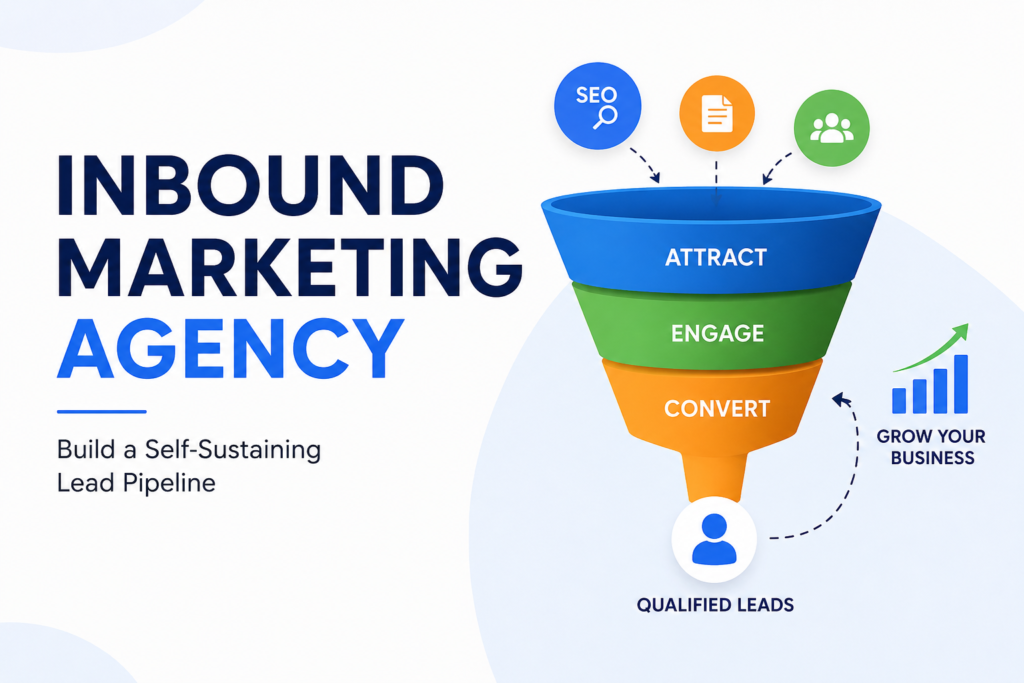
Inbound marketing is simple in theory: attract prospects through valuable content, engage them with personalized experiences, and delight them into becoming customers.
Unlike outbound methods (cold calls, email blasts, interruption ads), inbound leads control the pace and depth of their own engagement. That means the process must be designed around buyer convenience, not seller convenience, the teams that win are the ones who make it easy for a prospect to raise their hand at any stage, not just the stage the seller prefers
Your inbound marketing agency or in-house team should focus on three core channels:
1. Content Marketing & SEO Blog posts, guides, whitepapers, and case studies that rank for keywords your ideal customers search. SEO-optimized content helps improve organic visibility, making it easier for potential customers to find your business when searching online.
2. Email & Lead Nurturing Strategic follow-up sequences that move prospects through your buyer journey based on their behavior and interests.
3. Social Media & Thought Leadership Building community, sharing insights, and positioning your team as industry experts.
The 5 Core Tactics Every Inbound Marketing Strategy Needs
1. Topic Clusters & Pillar Content
Don’t scatter your content randomly. Build SEO-optimized pillar pages (comprehensive guides on core topics) surrounded by supporting blog posts. This demonstrates expertise to Google and creates a clear path for prospects to dive deeper.
Example: Pillar page on “Inbound Marketing Services” links to cluster posts on lead scoring, content strategy, and email automation.
2. Lead Magnet Strategy
Your inbound marketing efforts require friction-free conversion opportunities. Gated content (ebooks, templates, assessments, checklists) should address specific pain points your prospects face.
Interactive content like quizzes, calculators, and interactive tools can engage your audience and provide personalized experiences.
3. Email Workflows & Automation
Once you capture a lead, nurturing sequences should automatically send tailored content based on:
- Which pages they visited
- Which links they clicked
- How long they spent on your site
- Industry/company size data
An inbound marketing agency typically builds 3-5 nurture tracks for different buyer personas.
4. Landing Pages That Convert
One generic landing page won’t work. Create multiple versions targeting different segments and search keywords. Your messaging should speak directly to each prospect’s pain point and buying stage.
Social media reels and programmatic advertising dominate at the top of the funnel. Tailored content strategies attract highly qualified leads.
5. Analytics & Lead Scoring
Track what’s working: which content pieces drive the most leads, which email sequences get opened, which landing pages convert highest. Use lead scoring to identify when prospects are sales-ready.
SEO Inbound Marketing: The Missing Piece
Here’s where many companies fail: they treat inbound marketing and SEO as separate disciplines.
Wrong. They’re inseparable.
Consistent inbound lead generation builds a self-sustaining pipeline of interested prospects, reducing reliance on costly outbound campaigns. However, inbound doesn’t mean “sit back and wait.” You must still work strategically producing the right content, optimizing for the right keywords, and nurturing business leads properly.
Your SEO inbound marketing strategy should:
- Identify keywords your ideal customers actually search
- Create content that ranks for those keywords
- Optimize all CTAs and conversion paths for maximum conversion
- Use internal linking to guide prospects deeper into your funnel
Website Leads Agency clients using this unified approach see 3-4x more inbound qualified leads than those treating SEO and marketing separately.
Building Your Inbound Marketing Agency Playbook
Step 1: Audit Your Current Mix What content exists? What keywords aren’t you targeting? What gaps can you fill?
Step 2: Document Your Ideal Customer Profile Understand their pain points, buying process, objections, and success metrics.
Step 3: Map Your Buyer Journey Awareness → Consideration → Decision. Create content for each stage.
Step 4: Build Pillar Pages & Content Clusters Start with 2-3 core topics. Build authority around them.
Step 5: Launch Nurture Sequences Automate follow-up based on prospect behavior and segment.
Step 6: Measure & Optimize Track conversion rates, cost-per-lead, and revenue-per-lead. Double down on what works.
Final Thoughts
Building a self-sustaining inbound marketing pipeline takes consistent content, strong SEO, effective lead nurturing, and ongoing optimization. When these elements work together, your business can attract qualified prospects, build trust, and generate leads without depending entirely on paid advertising.
If you’re ready to build a reliable inbound lead generation strategy, contact Website Leads Agency to discuss your goals and create a plan that turns organic traffic into qualified leads.
FAQs
What’s the difference between inbound marketing and inbound marketing services?
A Inbound marketing is the strategy; inbound marketing services are the execution
How long before inbound marketing generates consistent leads?
Most companies see results in 3–6 months; real momentum builds after 6–12 months of consistent effort.
Do I need an inbound marketing agency or can I do it in-house?
Both work; agencies move faster and have proven playbooks, but in-house teams reduce cost long-term.
What’s the ROI of inbound marketing vs. paid ads?
Inbound marketing has lower short-term ROI but better long-term value; 80% of companies report positive ROI after 12 months.
How does inbound marketing and SEO work together?
SEO drives qualified traffic to inbound marketing content; inbound marketing nurtures that traffic into leads and customers.
Can inbound marketing work for B2B and B2C equally?
Yes B2B focuses on lead quality and nurturing; B2C emphasizes volume and faster conversion cycles.